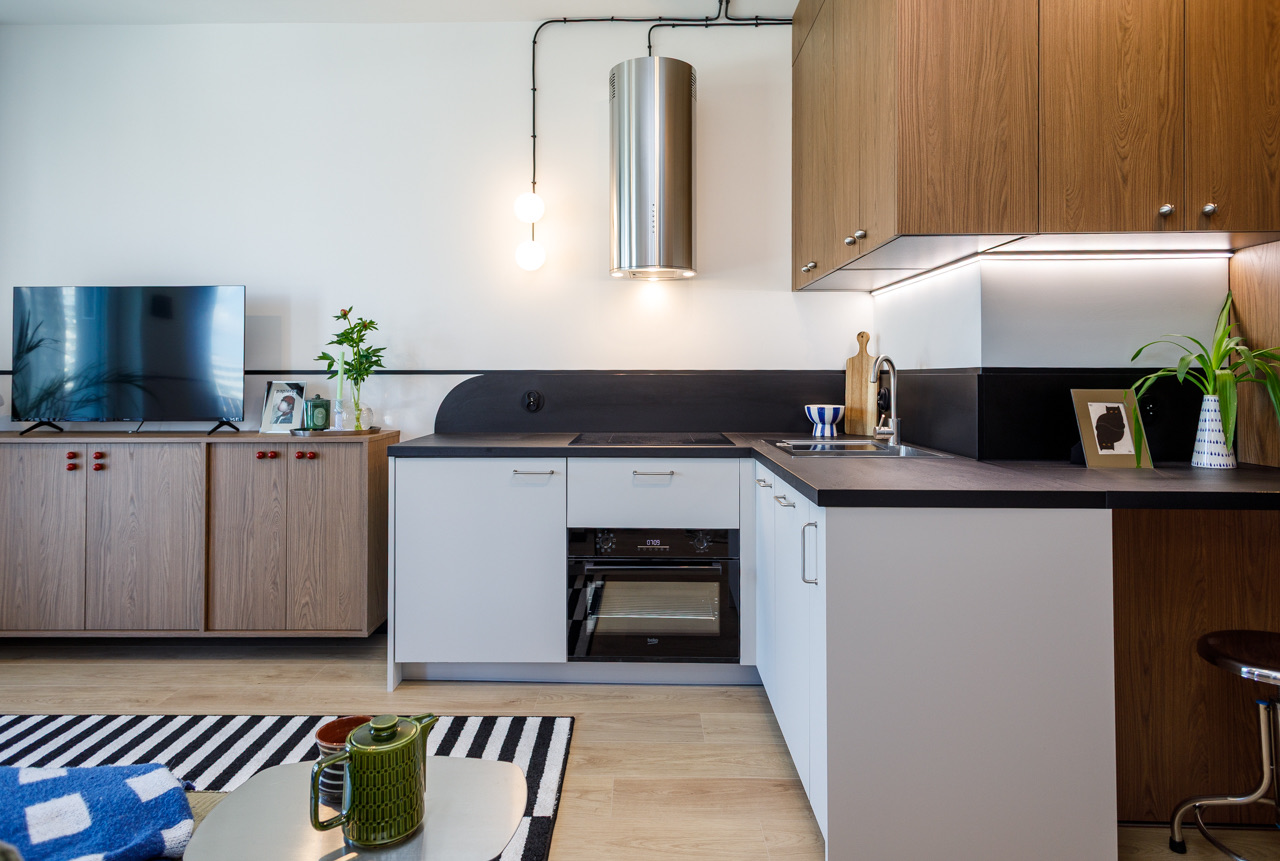
A website for an interior design studio. A portfolio that leads to a conversation.
KOUZI designs interiors in and around Wrocław, and online across Poland. The studio had a portfolio and its own way of working. It needed a website that would present both as clearly as the designer explains each decision to her clients.
We started with an audit of the existing site. Instead of expanding one long WordPress page, we organised separate paths: projects, services, process, about the designer, FAQ and contact.
The key principle: visitors should quickly see whether the studio is right for them, browse its work and easily describe their own home.
On the KOUZI services page (in Polish) clients will find the scope of interior design in Wrocław and online. The studio’s portfolio shows specific flats and houses, and a dedicated contact path makes it easy to ask about a project.
Three parts of one solution.
A website that shows the studio
Separate pages, large photographs, clear collaboration packages and a step-by-step process. We kept KOUZI’s identity and tuned the language to clients’ real questions and worries before a renovation.
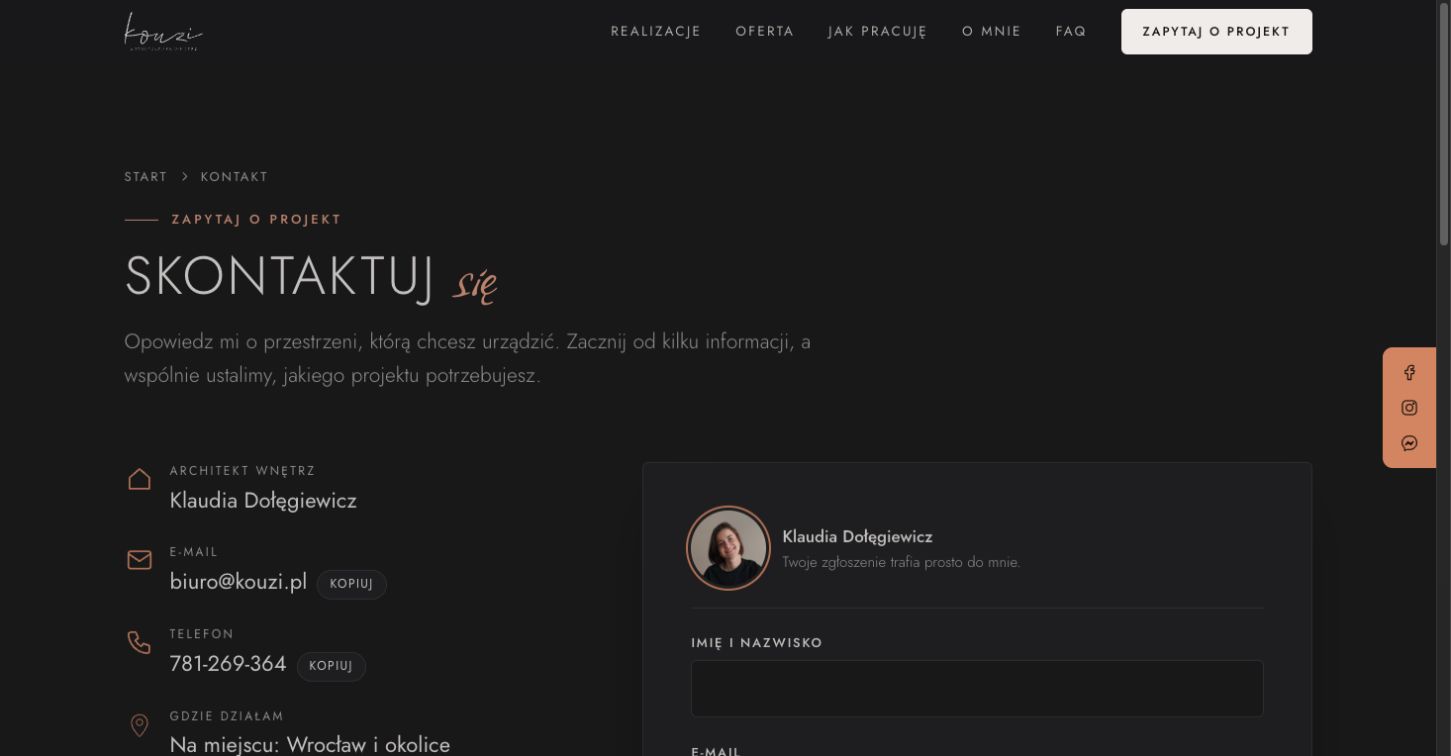
Contact straight to Klaudia
An enquiry form that accepts PDF or JPG attachments, plus a call-back request. Integration with the client’s Google account ties together messages, confirmations and an archive of enquiries.
Content from one place
An editorial back office on Google Drive replaces a complex CMS panel. Project materials go into an organised folder, from which both the website entry and the social media content are created.
One project. Several channels.
Klaudia focuses on design. She hands over materials once — the publishing process connects the website and social media.
Materials on Google Drive
Photos and a project description in an agreed format go into a folder on the client’s business account.
Daily AI review
The engine checks new sets, tidies up the description, chooses the format and prepares content based on the materials provided.
Project on the website
The portfolio gets a new project page with a description and a gallery. No manual page building in a CMS.
Instagram and Facebook
A carousel or reel goes into the publishing schedule. A story points followers to the new material.
The whole process is based on the studio’s own materials: photos, descriptions and agreed publishing rules.
Technology that serves the client’s work.
bāSites is the foundation of the site: a static website without a traditional CMS, separate page URLs, a mobile version and the technical basics of SEO.
Google integrations connect the forms to the client’s account. Google Apps Script handles enquiries, confirmations and the archive. Google Drive is where materials for publishing are handed over.
bāApps Herald connects the content flow and social media publishing. Everything runs through one editorial process, with full control over the materials.
bāIMN — our Notion back office organises documentation, decision history and requests on bāAlpha’s side. Every next change has context and its own place instead of getting lost in chats.
From audit to a working website.
- 2 November 2026
Audit and first mock-up
Analysis of the content, services, portfolio and contact path. The first mock-up of the new site architecture.
- 18 November 2026
Three main review rounds
Refining the header, language, layout, menu, photos, process and form based on joint reviews.
- 18 November 2026
Preparation and launch
A hosting-ready version, separate URLs, local photos and fonts, forms on the client’s account and technical fixes after the reviews.
The studio has its own place online, a clear offer and one way of handing over materials. The website is part of the company’s everyday work.
Design and build: bāAlpha · Interiors and brand: KOUZI, Klaudia Dołęgiewicz.